EIFS guide
How an EIFS wall works
EIFS stands for Exterior Insulation and Finish System. It's a wall built in layers, and each one has a job the next one depends on.
The short version
One coat versus a system
Traditional stucco is one hard cement shell over lath. It works, and crews have used it on desert homes for a hundred years.
EIFS takes a different path. Instead of one thick coat, it stacks thin layers that each solve one problem: water, heat, movement, and looks.
That's why we install it. A layered wall handles Arizona heat and monsoon rain better than a single coat can.
Inside the wall
What an EIFS wall is made of
EIFS is synthetic stucco, but it isn't one coat. It's a stack of layers that insulate, drain, and finish your home. Here is the wall from the outside face to your framing.
Exterior Insulation and Finish System
Outside
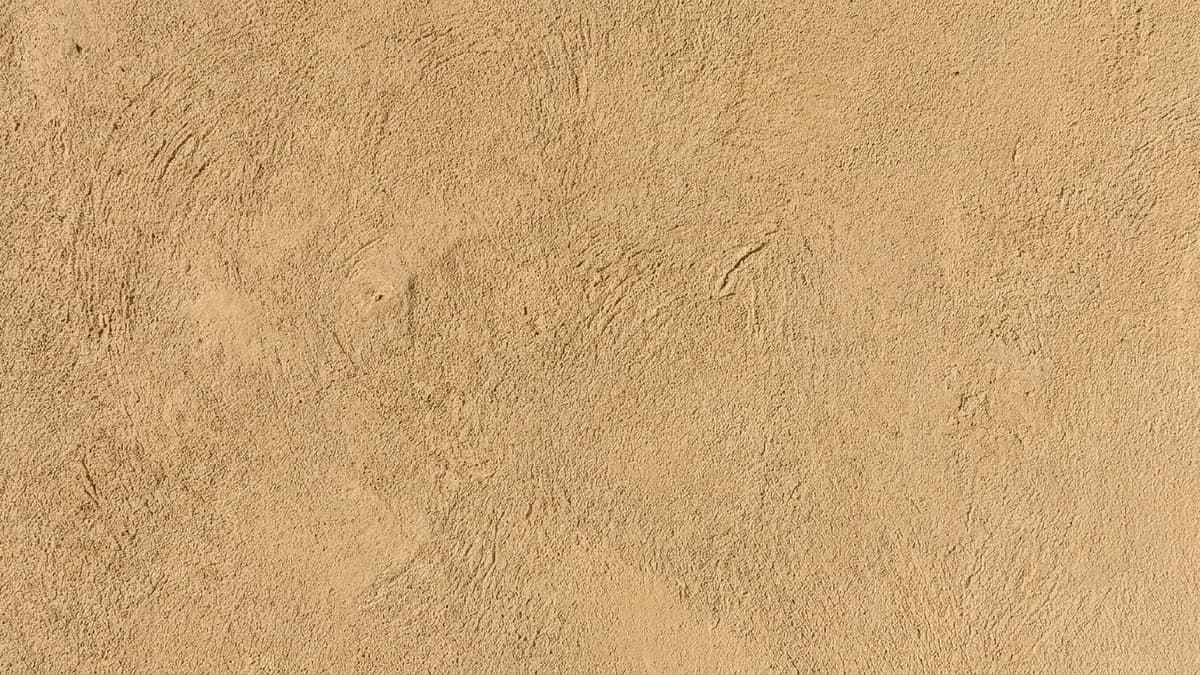 Acrylic finishColor and texture you see
 Reinforcing meshFiberglass for strength
 Base coatWater-resistant layer
 Insulation boardFoam, 1 to 12 in thick
 Drainage planeMoisture drains out
 Water barrierKeeps water off the frame
 SubstrateYour wall framing
Inside
The stack
Seven layers, outside to inside
Read the wall from the finish you can touch back to the framing you can't. Each layer sits on the one below it.
Acrylic finish
The colored, textured coat you see. It flexes with the wall, so it resists the cracks a hard coat gets.
Reinforcing mesh
A fiberglass mesh embedded in the base coat. It ties the wall together and takes the hits.
Base coat
The layer that locks the mesh to the foam. It builds the flat, even surface the finish needs.
Insulation board
Rigid foam, and the thickest layer in the wall. This is where the energy savings come from.
Drainage plane
Grooves or a gap that give water a path back out. Older EIFS skipped this, and that's what earned it a bad name.
Water barrier
A sealed membrane on the wall itself. It's the last line if water ever gets past the finish.
Substrate
The sheathing over your framing. Everything above is only as flat and sound as this.
Why the order matters
Each layer covers the weakness of the one under it. Foam insulates but can't take a hit, so mesh and base coat go over it.
The base coat is flat but dull, so the acrylic finish gives it color and texture. Skip a layer and the ones around it start doing a job they weren't built for.
That's also why the install order can't be rushed. We let each coat cure before the next one goes on.
The drainage layer is the whole argument
EIFS got a bad name in the 1990s. Early barrier systems sealed the wall tight with no way out for water.
When water found a gap around a window, it stayed. Sheathing rotted behind a wall that looked fine from the street.
Modern EIFS is a drainage system. Water that gets in runs down the plane behind the foam and out at the bottom.
If someone quotes you EIFS with no drainage layer, that's the old barrier system. Ask before you sign.
What installation looks like on your home
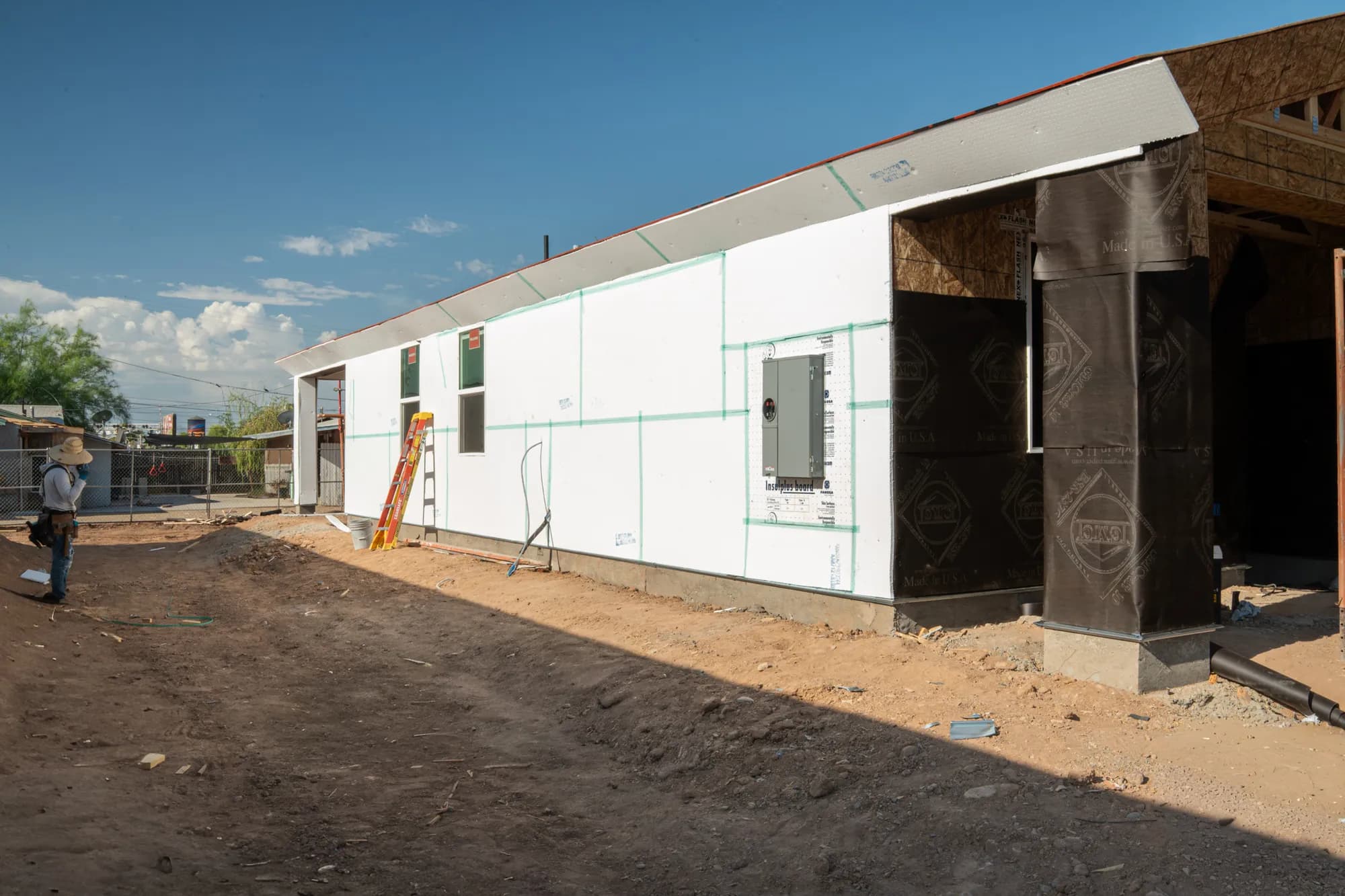
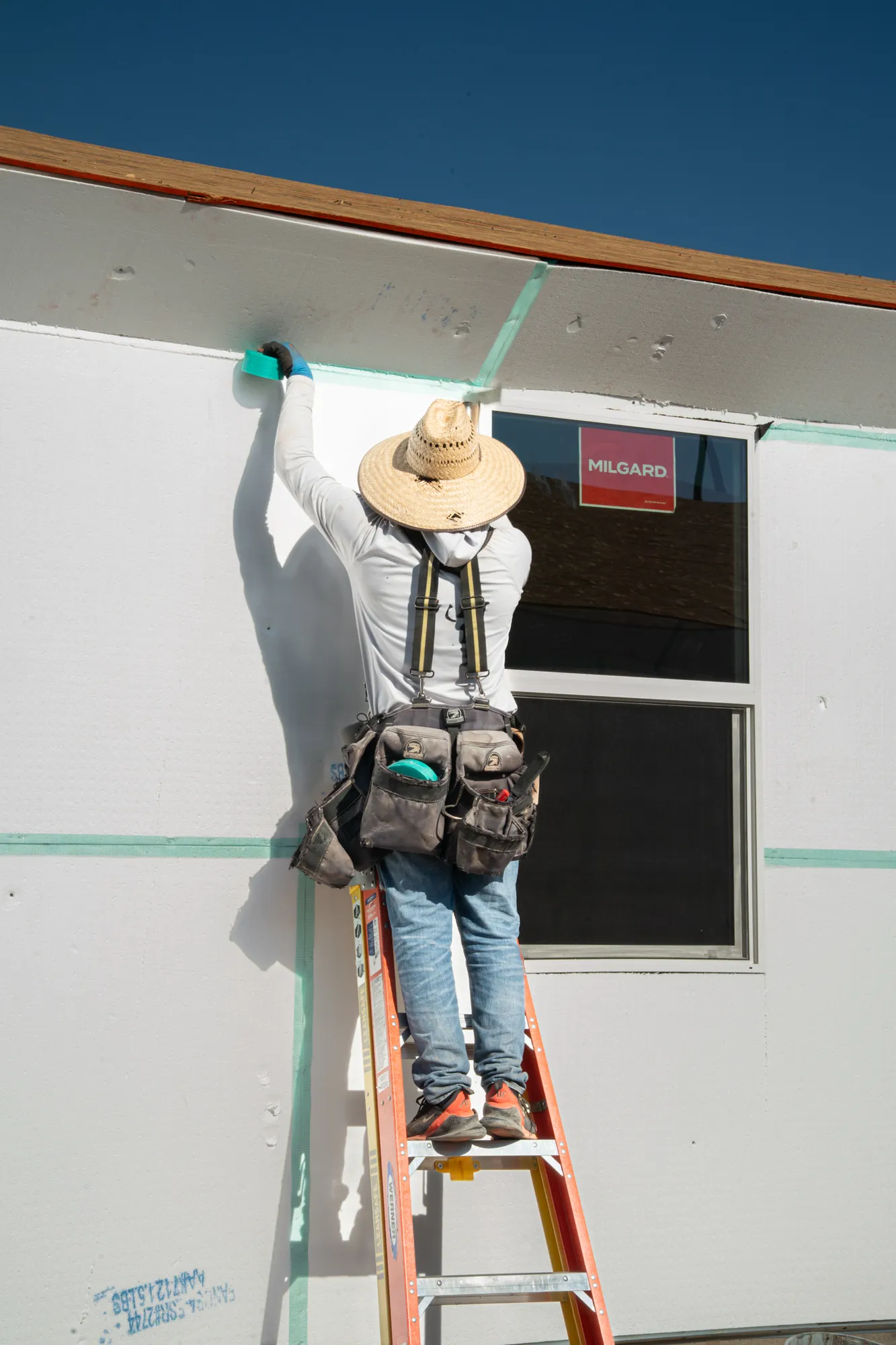
We start at the wall, not the finish. The substrate gets checked, then the water barrier goes on and every seam gets sealed.
Foam board goes up next, cut tight around windows and doors. Then base coat and mesh, then the finish coat and your color.
Most single-family homes take a week or two. Weather, wall size and any hidden damage move that number.
Who should install it
EIFS is less forgiving than stucco. A sloppy flashing detail at a window shows up as a stain three years later.
We hold Arizona ROC #336509 for stucco and lath. EIFS is the system we specialize in, not a side item.
Services
The trades behind an EIFS wall.
Stucco & EIFS
Full EIFS installs on new homes and commercial builds, plus traditional stucco.
View service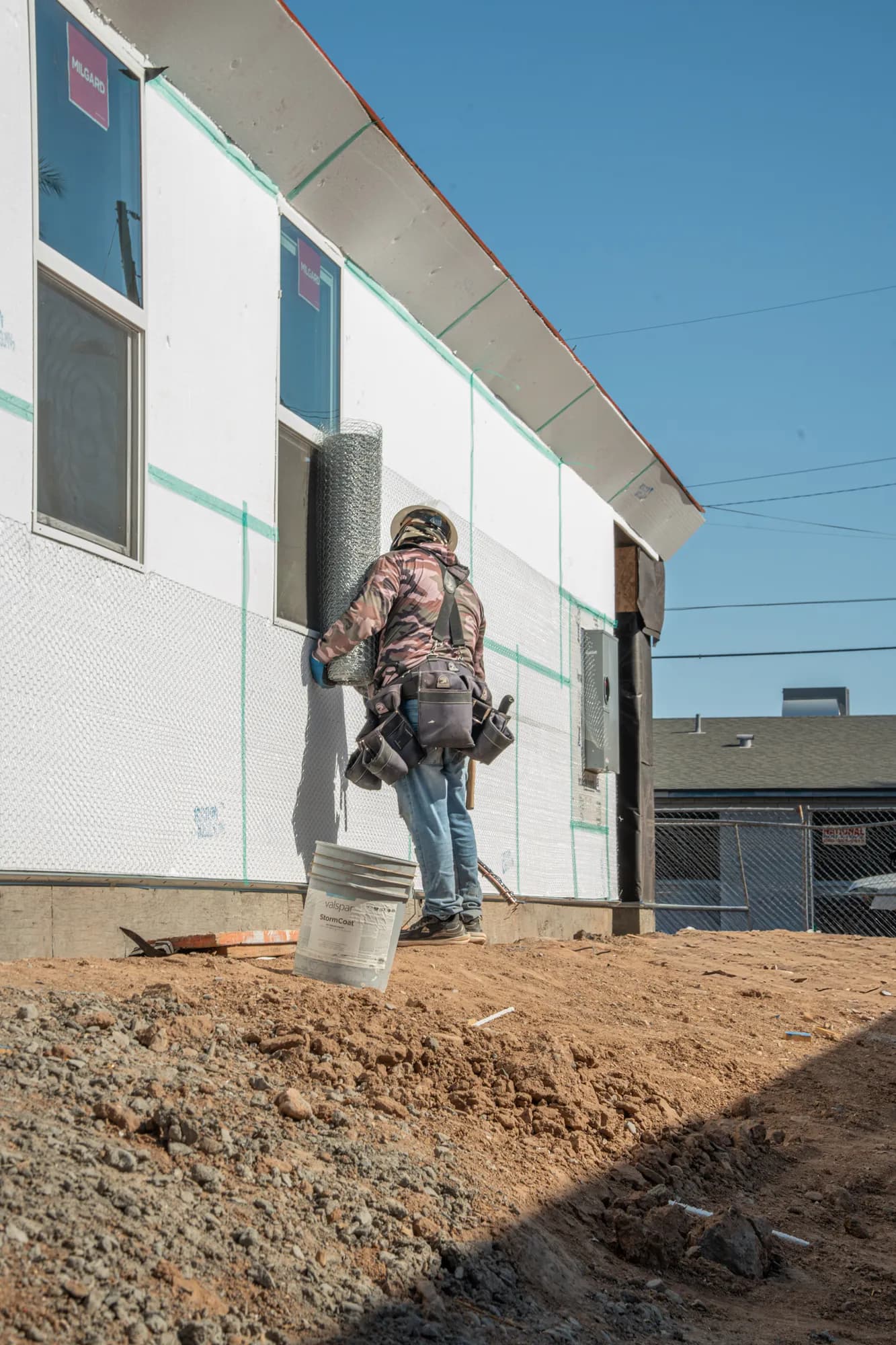
Lath
The base layer under a stucco wall, installed tight so the coats have something to grip.
View service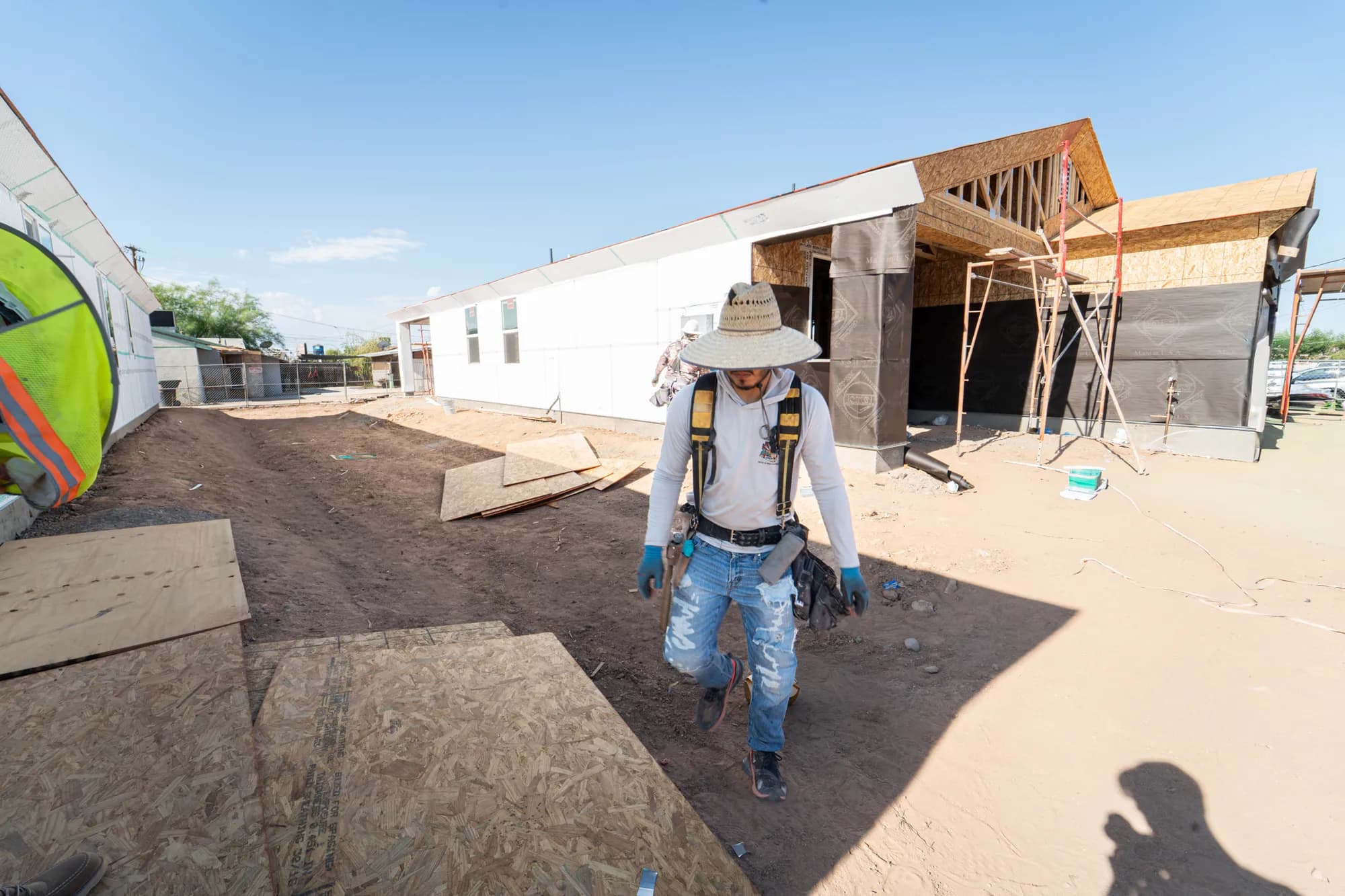
Stucco Repair
Crack and water-damage repair when an older wall needs work before a recoat.
View serviceROC #336509 · ROC #349457 · Family-owned since 2020
EIFS basics
Questions about the layer system
Free estimate
Tell us about your project
New stucco, a repair, drywall, or a full exterior. Send a few details and we'll get you a free estimate, or call and ask for Alan or Ana.
ROC #336509 · ROC #349457 · Family-owned since 2020